KeyboardGunner
2024-10-24 03:01
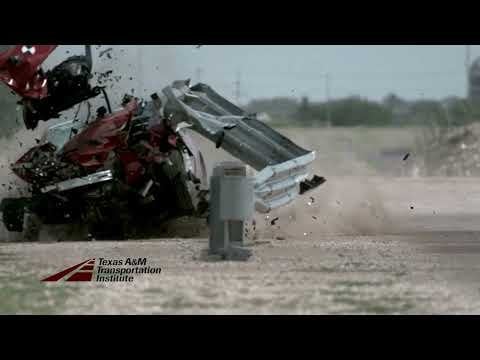
Here's the article about it.
[TTI Advances Research on EV Safety and Roadway Infrastructure](https://tti.tamu.edu/news/tti-advances-research-on-ev-safety-and-roadway-infrastructure/)
quita_tiempo
2024-10-24 03:02
Edited.
tenemu
2024-10-24 03:41
“The impact of EVs on roadway infrastructure is a growing concern, with states like California, Florida and Texas leading in EV registrations, according to data derived from the National Renewal Energy Laboratory and Experian Information Solutions. Nationally, EVs are continuing to represent an increased portion of new vehicle sales. As the trend continues to rise in the coming years, the safety implications of this shift necessitate proactive research and adaptation”
Can someone explain to me why people make such a big deal about there being more EVs on the road and its relationship to highway safety?
It’s a 4000lb sedan. Those have existed for a long time.
GearM2
2024-10-24 03:56
Yeah I was thinking the same. Pickup trucks and SUVs weigh 5000 lbs and more. I know pickup trucks get except from a lot of regulations because they are meant for special utility purposes but realistically they are just used as passenger vehicles most of the time.
[deleted]
2024-10-24 03:59
[deleted]
Hetairoi
2024-10-24 04:10
Hand wringing, fear, uncertainty and doubt.
Bensemus
2024-10-24 04:22
This test had absolutely nothing to do with that though. EV fires are rarer than ICE fires. The US is absolutely full of massive SUVs and trucks yet somehow a slightly heavier sedan is the issue.
Cunninghams_right
2024-10-24 04:24
university looking for research grants by making the problem seem more important. certainly if there are more heavy vehicles on the road, then things may need to adapt, but they spice up the verbiage to make it seem like the research is more important.
420Deez
2024-10-24 04:35
np
cavey00
2024-10-24 04:37
Either bad barrier design or trying to make headlines. A ford mustang weighs the same. “Oh but EVs are unsafe for everyone else on the road!” Stfu. Here’s some facts…you know what nvm. You won’t listen anyway.
[deleted]
2024-10-24 04:48
I can easily explain it. It’s anti-EV propaganda. There are a number of corporations whose business models are threatened by EVs and they are ruthless.
emezeekiel
2024-10-24 04:53
If anything, it’s that ICE cars have their heaviest item, the engine, centered at the same height as guardrails.
Meanwhile EVs have nothing but a crush core at that height, and while that hits the guardrail and starts crushing…. the battery pack, which is much much lower than the guardrail, creates a pretty huge moment force on it… it also keeps the cars momentum going.
You can see in the video how the car ducks right below the guardrail and basically pops it up and out. That’s likely cause the battery is so low. Just a guess but it sure looks like it ducks.
flompwillow
2024-10-24 05:16
Diesel 3/4 ton+ trucks are over 7k, and a R1S is like 6.7k. Nothing new here, but we’ll see the average weight increase over time.
mistsoalar
2024-10-24 05:24
I wonder what would happen if the rail was lower
FordGT2017
2024-10-24 05:37
Model 3 is as light as it gets for an EV. Every car on the road will rip through that barrier
ConsiderationSea56
2024-10-24 05:43
Texas A&M. Enough said
Scifihistory
2024-10-24 07:44
**Bottom Line Up Front**: State traffic departments want to increase their budgets to make roads safer.
The research proposal is genuine exploration of crash physics and **is not EV hate.** The concern is that over time increased EV adoption (yay!) will result in the **average** crash involving more force(s) and potentially result in more fatalities. (Force = **Mass** \* Acceleration)
Take a look at the article's linked [study description](https://www.pooledfund.org/Details/Solicitation/1612). California, Washington State, Illinois, Iowa, and Texas are pooling funds to do further testing.
Obviously 5000lb ICE sedans exist, but the mandate of these traffic organizations is to build safety features around the **most likely crash, not the most deadly**. Modern road side safety features were designed to handle the **weight and physics** of the average (stock) ICE cars and trucks. Given the M3 test above as well as this [Rivian](https://www.autoevolution.com/news/rivian-r1t-smashes-through-guardrail-in-crash-test-moves-concrete-barrier-in-the-process-228645.html#agal_6) test - it's not crazy that states are worried that EV crashes will result in an increase in fatalities.
In Texas the concerns is two-fold.
1. Unique EV physics coupled with increased weight \*\*may\*\* result in an increase in crash fatalities.
2. State safety organizations are facing a potential double whammy. The need for spending more money on stronger roadside safety features and the loss of (gas-based consumption tax) revenue to fund them.
Excerpts:
**Fatalities**
>Research is needed to address these issues to prevent us from getting too far behind the design curve and experiencing a potentially significant increase in roadway departure crash fatalities. Note that any advancements made to accommodate EV impacts would likely have an **added safety benefit of accommodating heavier ICE vehicles** as well.
**EV Crash Physics**
>For example, their effect on roadside safety hardware has the potential to be significant based on their increased **weight**, lower **center of gravity**, and different **crush stiffness**
**More Mass, More Problems**
>EVs are considerably heavier than comparable ICE vehicles. For example, the Ford Lightning EV pickup truck has a base curb weight ranging from 6,015 lb to 6,893 lb depending on battery range and trim package. Depending on the engine configuration, the Ford F-150 ICE pickup has a base curb weight range of 4,465 lb to 4,696 lb for a 4x2 drivetrain and 4,705 lb to 4,948 lb for a 4x4 drivetrain for the same cab style (SuperCrew®) and pickup box style (5.5-ft Styleside) as the Ford Lightning
Fun_Marsupial_5380
2024-10-24 08:27
EVs hit guardrails just like gas cars. But, their heavy batteries can make crashes a bit rougher. Always be safe!
KnubblMonster
2024-10-24 10:00
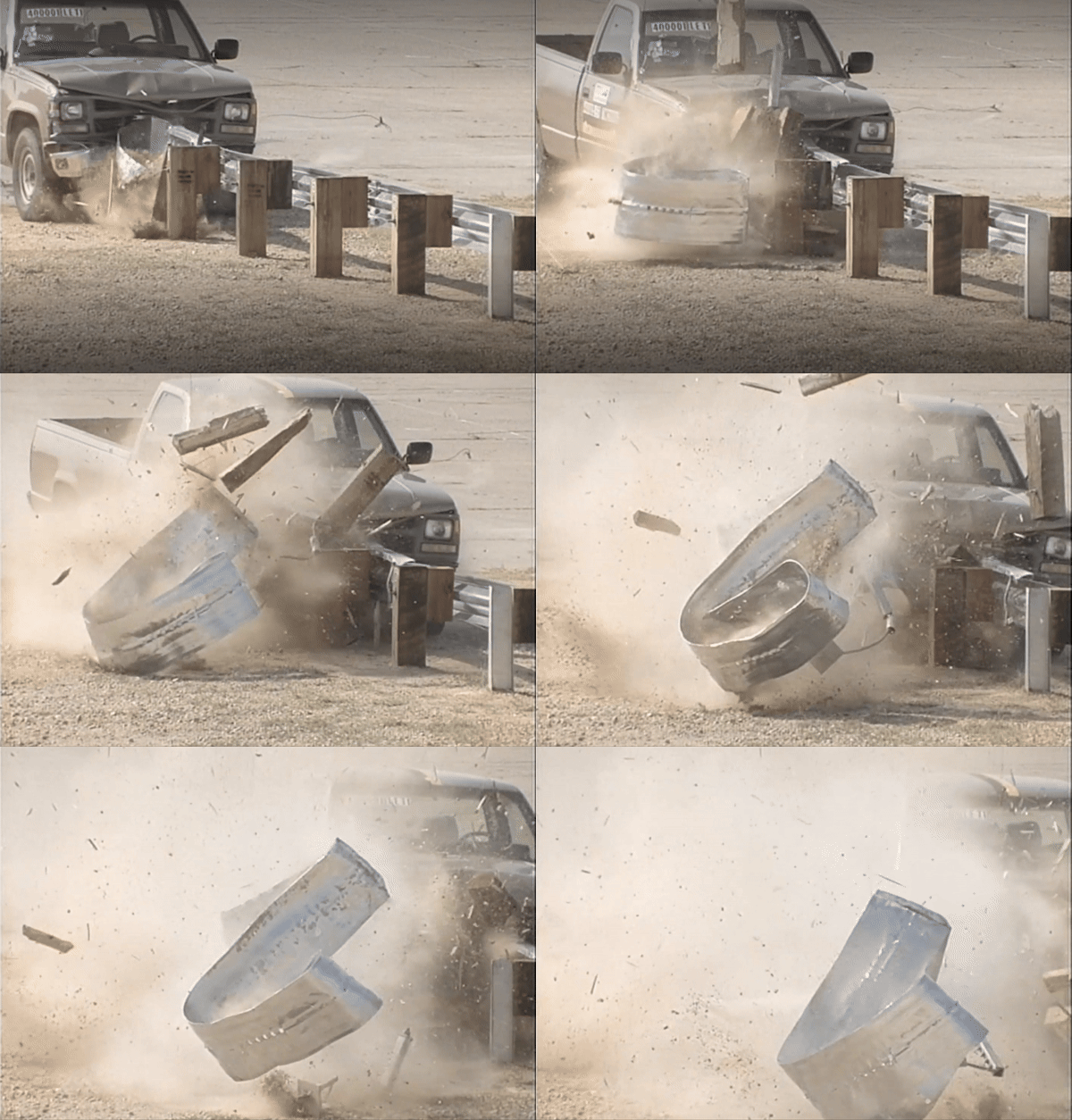
At the end of this other video the guardrails are way tougher (same crash scenario but with trucks). Why would a lower center of gravity suddenly make guardrails rip apart like that?
https://youtube.com/watch?v=_XXJqEY-sXk
[deleted]
2024-10-24 10:28
I'm pretty sure this is gonna be the answer. The battery sits so low that it basically just weed-whacks the supports for the guardrail up and out. The rail was designed to absorb the impact of the vehicle at the bodyline and redirect through the posts down into the Earth where they're rooted to dispel inertia. But in that shot from behind the rail, you can really see the battery just fuggin' plowing through the supports and defeating them.
Hey... On another note, how often do Teslas hit guardrails, anyway?
elatllat
2024-10-24 12:38
Gas cars hit guardrails just like EVs. But, their heavy engin can make crashes a bit rougher. Always be safe!
emezeekiel
2024-10-24 12:39
Most cars would go right over it…
LurkerWithAnAccount
2024-10-24 12:50
I don’t know if Tesla will truly achieve widespread driverless vehicles at all, let alone on their timeframe, but I have zero doubt that SOMEBODY will succeed in this endeavor within the next 5-10 years.
To me, studying this topic seems like trying to hit a moving target and a tremendous waste of resources. Road safety changes take forever to implement and by the time they settle on the solution, the vehicles involved may look and operate very differently.
If we can dramatically reduce the number of crashes by eliminating DUIs, excessive speed, distracted driving, through driverless transport, it makes all this stuff moot.
70ga
2024-10-24 13:17
gig'em
TheKobayashiMoron
2024-10-24 13:31
The battery is on the floor and passing underneath the main part of the guardrail meant to absorb the impact force.
0gopog0
2024-10-24 13:43
It's likely more than just a matter of lower center of gravity. Take a look at this video \[4:50-5:30 in case the time stamp doesn't work\](https://youtu.be/w6CKltZfToY?t=295). Note one part of them failing occurs when the post cannot easily rotating. The way I see it (mechanical engineering background if it is worth anything), is the lower center of gravity and the layout of crumble and non-crumble zones (consider the engine block in an ICE in comparison to an EV's batteries) may be introducing more shear and bending forces at critcal points in the barrier material causing the barrier to break and fracture. I would be very curious to see how EV's with a higher COG perform in the same test and I wouldn't surprised to find if they fair better in barrier collision.
TheKobayashiMoron
2024-10-24 13:51
People are acting like this is some EV attack ad. EVs have a different design that present unique challenges to infrastructure. Safety standards are continually evolving with the vehicles on the road and there’s no reason to stop looking for ways to improve upon them.
The battery on the floor puts the heaviest part of the vehicle below the rail that is designed to absorb most of the impact force. Maybe the solution is a double rail so the lower rail extends almost all the way to the ground?
MindfulMan1984
2024-10-24 14:09
Yep, mostly funded by Petro-dictatorships from Middle Eastern countries.
CillGuy
2024-10-24 15:11
I'll start taking transportation institute's concerns of heavy EV's seriously after they crack down on the insane size of modern pickups and SUV's.
Scifihistory
2024-10-24 15:36
As others have pointed out, it's not just weight. The **weight distribution** of the car is fundamentally different. If you look up other MASH tests on YouTube, (typical) ICE vehicles don't plow through the guard rails.
Yes, obviously heavier ICE 7k ton pickups freely navigate our roads as do heavier Maybach's and Rolls Royces - but they're not common. Safety features are designed around the **most likely** crash. A \~4000lb F-150 comes off the production line every 40 seconds or so.
If the average car/truck is now going to be 6000lbs with low center of gravity, we need to design safety features around this new reality.
Road safety people around the country are **betting EVs will become more common** than ICE vehicles! Isn't this a good problem to have?
Scifihistory
2024-10-24 15:41
Also check out this [Pooled Fund text](https://www.pooledfund.org/Details/Solicitation/1612), which was linked from the A&M article.
Of note, the website features cutting edge 1990's internet technology - meaning a massive wall of interesting text hidden behind a '+' sign.
Scifihistory
2024-10-24 15:52
This is not crazy question to ask. Road safety departments will still want more budget to make roads safer. 
When SUV's started becoming massively popular, there were concerns about them being more likely to roll in an accident. But these days, traffic safety organizations don't seemed to be too worried about excess deaths from higher center of gravity SUVs.
Why? Perhaps blind spot warning, lane keeping, air bags, and digital traction control technologies evolved along with the uptick in SUV adoption, ultimately bleeding off some of the risk.
One could argue then that over time, reliance on lane keeping and adaptive cruise control will mitigate risks (of plowing through guard rails).
Scifihistory
2024-10-24 15:53
California has signed up for further testing. Transportation departments all over the country literally pool funds:
[https://www.pooledfund.org/Details/Solicitation/1612](https://www.pooledfund.org/Details/Solicitation/1612)
MainsailMainsail
2024-10-24 16:11
Main difference I'm seeing is on the Model 3 test here the bolts holding the sections of the barrier gave way allowing the car through. Whereas even on the box truck there they held allowing all the posts along the entire length to take some of the load, instead of just plowing through individual posts right at the point of impact.
That break happens at an equivalent time *before* the trucks start to roll so far as I can tell so I'm not sure what else would cause the difference other than if there's a difference in vehicle speed.
mistsoalar
2024-10-24 16:54
indeed
jtmonkey
2024-10-24 17:18
https://i.redd.it/tolnmw0hmqwd1.gif
guard rails are there to slow cars down.. not stop them.. as this video from 1999 is trying to prove that trucks are unsafe because they are too heavy.
gtg465x2
2024-10-24 18:30
To support both ICE and EVs, they might need to keep the rail at the same height, but extend it further downward, almost all the way to the ground, so it looks more like a little wall than just a rail.
gtg465x2
2024-10-24 18:39
Surely some organization has statistics on fatality rate in accidents involving Model 3 and Y vs those involving similar size ICE vehicles. There are now millions of 3s and Ys on the road, so there should be some good, statistically significant data to go on instead of just theorizing that EVs must increase fatalities because they're heavier.
shedinja292
2024-10-24 19:00
Worth noting that in Texas there is an extra EV cost of $200 during yearly registration, this is already > 2x what the average sedan driver would pay in gas taxes.
Quick maths:
* $0.20 tax per gallon
* 30 miles per gallon average sedan
* 12,000 miles driven per year for the average person
* (12,000 / 30) \* 0.2 = $80
They get your mileage YoY during inspection/registration so I think it would be better to do it based on car weight & miles driven rather than an arbitrary flat amount
Dr_Pippin
2024-10-24 20:36
Nothing about that seemed different than what I expected, other than some bolts failing that I saw hold up in another test when hit by a truck. Guess I need to go find a recent crash for a 4K pound ICE sedan.
Scifihistory
2024-10-25 15:22
Totally agree! But vehicle weight should be factor in the tax equation.
Upbeat-Ad-851
2024-10-25 15:54
New Jersey levies 250 a year, it incrementally goes up $10 a year till it hits 280. Which is additional to your registration fee. Criminal in my opinion.
Jaywhatthehell
2024-10-25 20:24
The fact that the battery doesn't absorb the hit to the guardrail sounds like a lifesaver to me! If the battery absorbed the force, really bad things could happen.
Scifihistory
2024-10-25 20:54
The car literally plowed through a guard rail. If that’s all there is between a driver and a cliff or lake, it’s a problem that merits research.
The proposal is very clear it’s not simply a weight issue.
“…lower center of gravity, and different crush stiffness”
gtg465x2
2024-10-25 21:11
I agree that the guardrails merit research and may need to be redesigned with EVs in mind.
I was only pushing back against the general assumption that EVs may result in increased fatalities simply because they’re heavier. That could turn out to be true, but I think there are a lot of factors to consider, including weight distribution, so I would be interested in seeing some statistics either confirming or debunking that.
Teslamyeslag
2024-10-29 00:01
I can see the headlines.
Tesla crashed against a guardrail!
quita_tiempo
2024-10-29 03:00
Edited.
mchinsky
2024-11-02 20:35
I wonder how many tesla standard safety features they had to disable to even make this happen. A standard tesla would heavily brake and do some steering to avoid the collision and if it couldn't be avoided, it would slow down significantly.