← Back to topic list

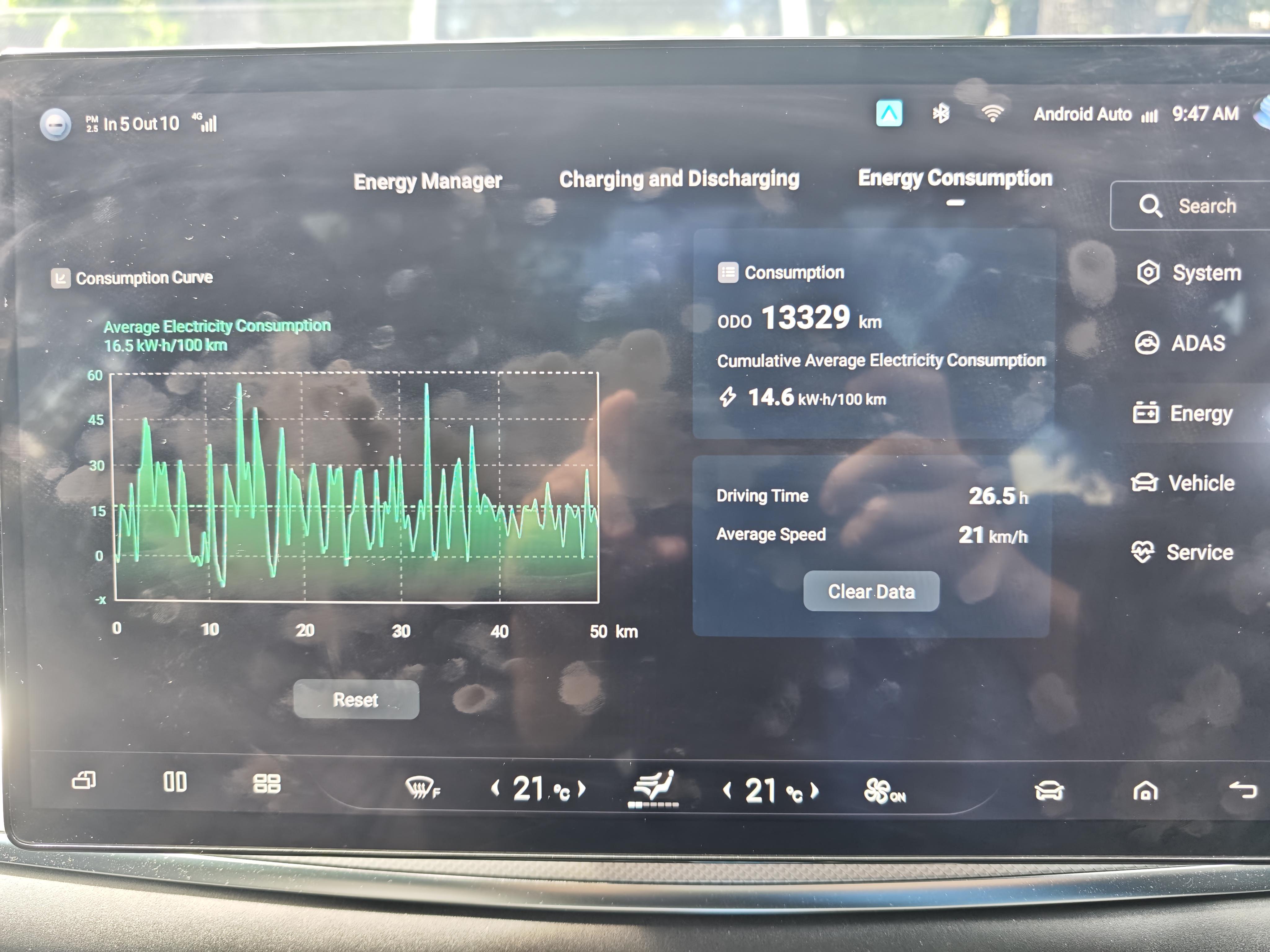
Efficient Driving in a Chaotic City - 14.6kwh/100km in an SL7

Aggressive_Lychee598 | 2026-02-07 06:44 | 47 views

Good Afternoon BYD folks, Recently I was discussing the matter of efficiency with my peers who own SL7s. I was as shocked to hear they were getting significantly less than the claimed range. They were getting above 16kwh/100km and were equally shocked to hear I was getting 570km (the claimed range for a premium rwd). For context, I live in the city of Bandung. A city most famous for traffic, it ranks twelfth globally in terms of congestion. My commute is 33km with a 200m elevation change. 21km of this is highway, 6 urban, 6 extra urban; and it takes an hour to get to work. Ambient temperature ranges from 20-30 degrees Celsius year round. My driving style is a little more Zen, but doesn't significantly affect commute times (I arrive according to google map's ETA 90% of the time). So I wanted to share with you folks some tips about driving more efficiently: 1. Put regen on high - Regen is you friend, the more you let the car regen instead of braking the more you put back into your battery. You can let high regen do almost all of your braking until 25kph if you drive smoothly. I suggest avoiding "sport" braking as this alters the behaviour of regen making it less consistent. When you do decide to use the brake it should be only for emergencies, downhill sections, or for speeds less than 25kph. 2. Preempt the traffic - Try to guess 5 seconds in advanced where the traffic around you will be. Place yourself smoothly in the position where you can drive comfortably. Traffic can be chaotic, but you will learn that even the most chaotic traffic can be predicted, meaning you brake less and brake smoother. Specifically in Indonesia its safe to assume no one uses their mirrors and people pull out into traffic with reckless disregard; using the horn is a necessity, try your best to preempt this. 3. Leave a 2-3 second gap for smooth driving - For those living in traffic-ridden cities, you may feel the urge to leave no gap in front of you so that you dont lose your spot. However, leaving a 2-3 second gap means you can smooth out the sudden speeding and slowing down of cars in front saving you electricity. You'll also reduce the chance of rear-ending someone, something motorcycles do not seem to understand. 4. Keep a stable speed - less than 30 on iffy roads and gangways, 30 in residential areas and small roads, 40-50 on city roads, 100 on the highway. Try your best to follow this, but if everyone is going slower or faster then try to follow the average speed of traffic to avoid abrupt speed changes. Maintaining a consistent speed is the most efficient form of practical driving, even more so than speeding up and using regen to slow down. This one is dependent on your local speed laws and conditions. 5. Zen doesnt mean slow acceleration - You may be surprised I drive on sport mode all the time with braking set to comfort. On take off and speeding up, I usually apply 1/4 gas to get up to speed briskly and sometimes more. I tested this back to back with eco and found that brisk acceleration doesnt hurt efficiency as long as you dont overshoot your target speed. Thats a fundamental difference between electric and gasoline cars. 6. Dont corner too slowly - Sometimes I see a car speeding and weaving like a maniac. But when it comes to a corner they slow down excessively. The most efficient way to round a corner is to go at a a brisk pace. Dont carry excessive speed to the point where you can make an emergency stop, but if you dont feel any lateral Gs you're probably driving to slowly. 7. Everyone is trying to get somewhere, give them road - This one is just holistic. lt is inevitable someone will merge in front of you if you leave room, but just remember everyone driving has somewhere they need to be -- they are just like you. No reason to create unreasonable stress and difficulty for you and the other driver by not letting them merge -- its faster to let others go where they want. If you end up stressing yourself over losing a spot, or attempt to block others, you will drive less efficiently (and its bad karma). 8. Try to follow the lane markers and rules (so long as they are reasonable) - Yeah, this one needs to be said for Indonesia. 9. Keep your car in good shape - Tyres should be 42psi, and have your car serviced regularly (moving components need to be greased). Its also wise to make sure your car is spoored properly every once in a while otherwise you might be wasting tyres and electricity for no reason. And thats about it. Not only will you drive more efficiently, but hopefully become a better driver in the process. Most of these tips may be second nature/common sense for those driving in more advanced countries, but not so much in Indonesia Hope it helps!
Comments (24)
Hammm89 2026-02-07 07:00

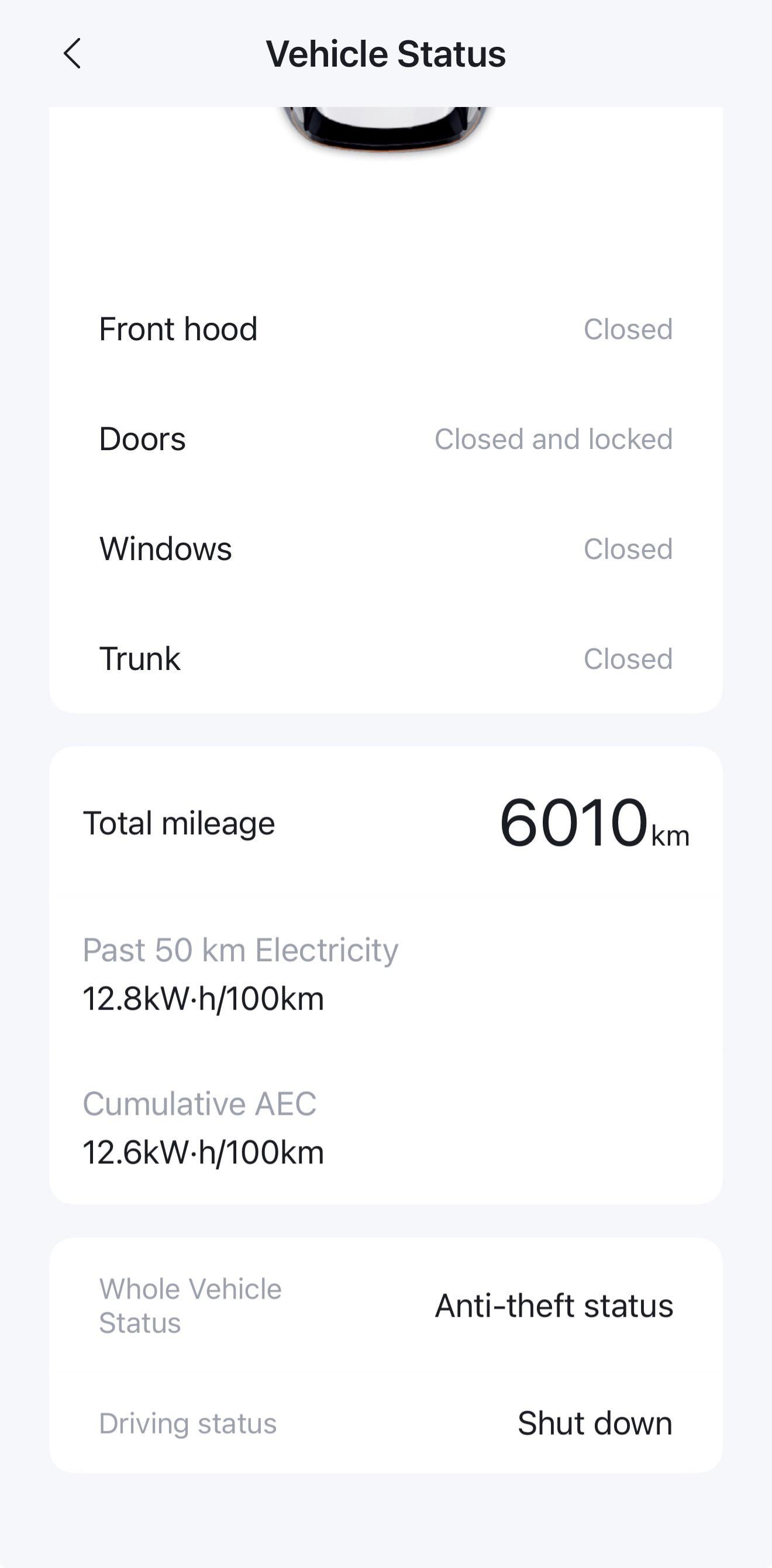
https://preview.redd.it/nmxgcmakt0ig1.jpeg?width=1320&format=pjpg&auto=webp&s=eb905b653b4213c5d209a3c7141d9784cc792392 SL7 RWD, Singapore, 12.6kwh/100km cumulative efficiency after 6000km. It's possible!

Aggressive_Lychee598 2026-02-07 07:06

Fantastic! It might be a bit easier to drive in Singapore, but 12.6 is an outstanding efficiency number nonetheless. Keep it up 👍

Unusual_Turnip_3394 2026-02-07 07:33

Impressive 👍

windsweptwonder 2026-02-07 07:52

Your average speed is 21km/h. That's why your consumption is low. People who drive in urban environments where speeds never get over say, 80km/h at most use a lot less power. It's not rocket science and it's not down to your wonderful skills as a driver.

HarmPoIsMe 2026-02-07 08:08

LOL, I’ve only done 1.000 km until now in my 4x4 BYD Tang L and have reached an average consumption of 32kWh. The car is a lot bigger and heavier of course and the average temperature has been between -5 and -20, so that will not have helped with getting a nice consumption. But 16kWh is probably never going to be on my average consumption indicator.

Aggressive_Lychee598 2026-02-07 08:17

I preface this by telling you my friends using SL7s are getting 16kwh+/100km, as a reference for similar conditions. Also 66% of my driving is highway at 100+ kph. The low average is because of the ridiculous jams that happen in my city.you can check "Bandung Macet" on google to see what I mean.  I can do better of course, but I have a lot to share as well with folks who may not be so familiar with eco driving (as I did with friends).

Aggressive_Lychee598 2026-02-07 08:21

Temperature plays a huge role. If the temps get that low, its more likely you have good driving conditions and you are already driving quite well (due to a strong driver training program in first world countries). You might take home a few points, but I'm sure you know most of this already.

HarmPoIsMe 2026-02-07 08:27

Yep, most of your tips I’m already doing. I can’t wait until summer and understand what kind of mileage I will then be able to get. At the moment I can only get a real life total range of 270 km (from 100% to 10%) before I have to charge again. That is not really a great user experience. Do you charge to 100% every time (if you also have a LFP battery) or do you have another (home) charging strategy?

WinterBarnacles 2026-02-07 08:33

> Put regen on high - Regen is you friend, the more you let the car regen instead of braking the more you put back into your battery. You can let high regen do almost all of your braking until 25kph if you drive smoothly. I suggest avoiding "sport" braking as this alters the behaviour of regen making it less consistent. When you do decide to use the brake it should be only for emergencies, downhill sections, or for speeds less than 25kph. I may be wrong about this but my understanding is that the high regen setting a bit of a misnomer - it's really only affecting the experience of how the pedals work. You can create the same change in speed by coming off the accelerator with regen on high, or by gently braking with regen on standard, and either way should use regen as it slows you down and put power back in the battery. You can confirm that the brake is causing regen by watching the power usage go negative as you brake. What you need to avoid is: 1. Braking hard, as if it can't slow you down enough it'll use the physical brake which turns your energy into heat instead of battery 2. Accelerating then braking unnecessarily, as even with regen you're losing some power adding speed then taking it off again, which often you wouldn't have needed to do if you'd anticipated better (as you say in your other points)

Aggressive_Lychee598 2026-02-07 08:35

I agree, weather based range sucks.  Because weather in my area is predictable, I tend to charge every 3-4 days at work using a 7kw charger. I try to keep it at about 40-80% soc. I hear lower SOCs are better for LFP battery health, and this range is practical for me. But if youre getting 270km from full, do consider wether this is acceptable for you. In the summer, you may be satisfied with lower battery charge states.

Aggressive_Lychee598 2026-02-07 09:12

I agree with both your points. What I feel about the brake pedal in my rwd sl7 is that when you press the brake pedal, the front brakes engage but the car tries to maximize braking force through regen. It might be a bit more wasteful than 100% regen. But I will try to reset my computer and see if there is a significant difference between standard and high on my. I will report on this in a future date.

wyx167 2026-02-07 09:26

I have been driving this style too. If I drive using Standard regen mode but I mostly coast and avoid hard braking, it is still as efficient as High Regen correct?

CarlSPC1 2026-02-07 09:34

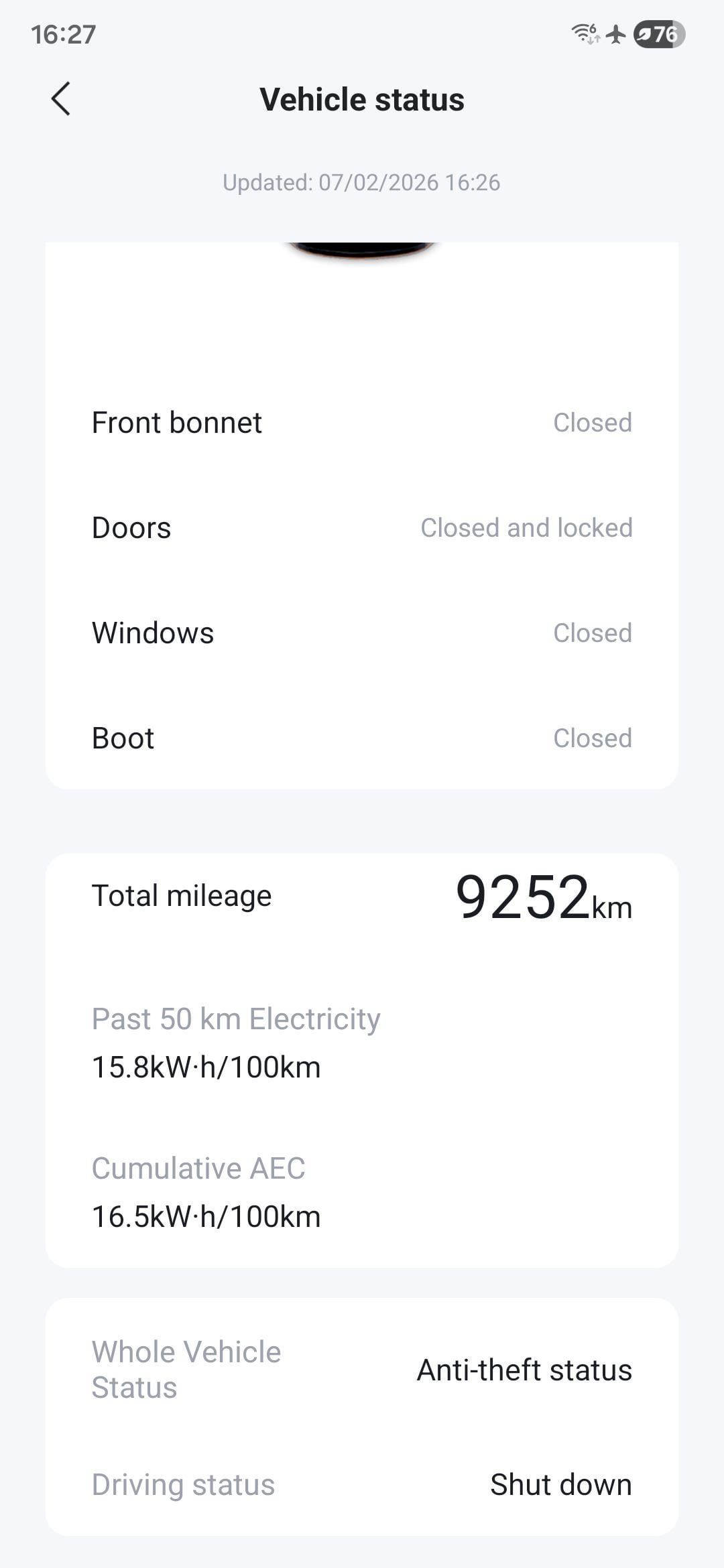
This is from my SL7 AWD version, pretty consistent with the readings for last 9k kms. I do mostly highway driving with varying speeds normally 100kph with occasional short bursts of acceleration to 130-140kph, mostly flat grounds with temperature between 18 to 30 recently. High Regen with eco mode. Not bad for two motors. I strictly follow most of the habits you mentioned including tyre pressure top up every 2 or 3 weeks or when I see them drop below 42psi. https://preview.redd.it/8rvpdlt9l1ig1.jpeg?width=1080&format=pjpg&auto=webp&s=4ce70c269047c49a359d40357fd4115d16b0fd1e

WinterBarnacles 2026-02-07 10:02

> What I feel about the brake pedal in my rwd sl7 is that when you press the brake pedal, the front brakes engage but the car tries to maximize braking force through regen. It might be a bit more wasteful than 100% regen. Interesting, it hadn't occurred to me that RWD would be different (I have AWD) but that makes sense. If you're telling the car "brake", it seems reasonable to expect it to brake with all the wheels which as you say will waste power if the front only has mechanical brakes.

Speeder172 2026-02-07 10:49

How are you doing this guy???  It's winter here, outside temp is between -2 / 5 degrees and my consumption in city is 25kwh/50km on a Seal AWD.

LawfulnessBoring9134 2026-02-08 00:07

I was under the impression all braking energy was returned to the battery, but I guess it’s not a perfect system. Sound tips for economy driving transfer from the old tech. I drive on country roads for 90% of my driving so not the opportunity for regen assist as it might be in heavy traffic. The number varies between 16-20kwh. Not great, but it works well for our lifestyle.

Worried-Ant5301 2026-02-08 00:24

Same "average consumption" as my SL7 :) Warm climate = low energy consumption. It's that simple.

Worried-Ant5301 2026-02-08 00:25

Because you have a warm climate, heating the battery and the interior greatly affects energy consumption.

hapticm 2026-02-08 03:44

Yes if you've driven a BYD when the motors or HV battery fault (therefore no regen) you'll see how far you need to push down on the brakes for the hydraulic brakes to actually engage at all!

Aggressive_Lychee598 2026-02-08 05:26

Yes, temperature has a big effect which is why I shared this as relevant information in my post, but its not everything. My type of driving has an elevation change of 200 meters and 66% of my commute is high speed 100kph driving. Someone pointed out the average was 21kph, and thats because of the insane stop and go traffic that plagues the urban portion (which is inherently inefficient). Factoring ridiculous stop and go, and majority high speed driving, 14.6 isnt too shabby when compared to 16+ people get in my area

goldi8 2026-02-08 14:06

Well the app consumption is never true. I track with a separate app and have a way higher consumption than what the BYD app shows. So either the APP neglects consumption by the battery heating at low temperatures and that stuff (my assumption), or it's generally off. The assumption comes multiple 10km short trips with average of 20-21kwh/100km but still only getting 300km range so >32kwh/100km consumption

Aggressive_Lychee598 2026-02-09 04:01

There is a setting actually that you may be able to change. In the Car settings, under the "Energy" tab, you can change range display to dynamic. This calculates your range based on your cumulative average consumption rather than the advertised range by BYD. Have you tried it? It might save you a little bit of trouble. If that was the key, I would also try resetting the cumulative range every season (if you live in a 4 season country). My suspicion is that "dynamic" range will still not take into account outside temps.

goldi8 2026-02-11 20:52

Yeh it's already in dynamic mode. So yes it does not take the temperature into account. But I was talking about the reported consumption (history + average) in the APP being not correct, not the estimated range of the display.

Aggressive_Lychee598 2026-02-12 14:52

My mistake! I've never given the app much thought. The 2 uses I have for it is for turning the AC on, and unlocking the car... But I concur the app needs polishing. When I try to unlock the car using the BYD widget it needs a biometric scan and opens the full app. It makes the widget pointless, and shows me the app is clunky. I didnt know about the range issue.

Add comment

Login is required to comment.

Login with Google